
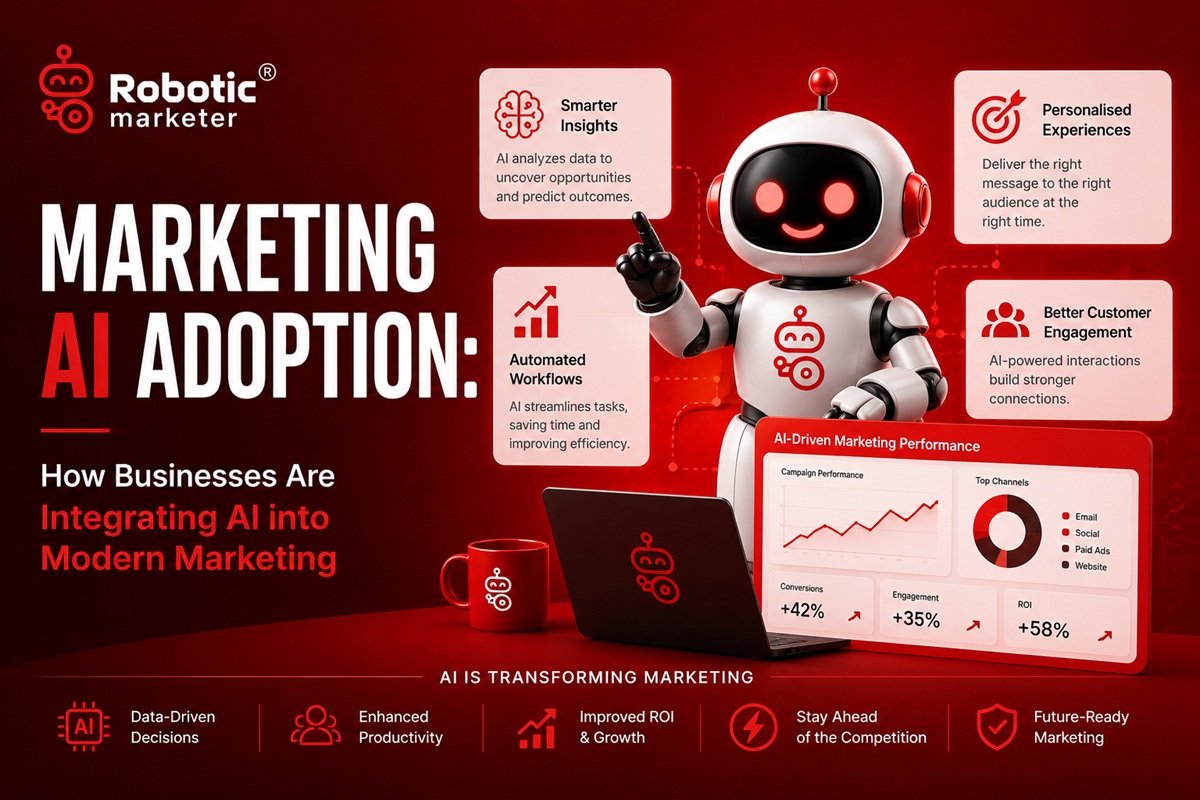
Marketing AI Adoption: How Businesses Are Integrating AI into Modern Marketing
AI has redefined the marketing playbook for businesses working to keep pace with consumer demands and achieve sustainable growth. Integrating AI into marketing strategies stands not as a luxury but a smart path forward for organizations of every size. As organizations look for efficiencies and better decision-making, artificial intelligence has moved from buzzword to business essential. This article explores how companies use AI in Modern Marketing, why adoption keeps accelerating, and where the technology delivers the greatest practical impact.
The Increasing Role of AI in Modern Marketing
Digital transformation continues to shape how companies communicate, connect and convert audiences. AI marketing strategy adoption is growing because it streamlines processes and allows organizations to make strategic decisions based on rich data. From predictive analytics to real-time personalization, AI gives marketers the power to manage complexity and drive relevance. As a result, teams can focus less on repetitive manual work and more on creativity and brand growth.
Current Trends Driving AI Adoption in Marketing
The market has seen a steep rise in AI adoption across marketing disciplines. Recent years have shown that businesses, especially small and mid-sized firms, prioritize AI-driven solutions for their scalability and accuracy. Real-time adjustment of campaigns enables brands to meet shifting audience behaviors. Automated marketing platforms provide workflows that bridge the strategy-to-execution gap with impressive efficiency. This growing reliance has shifted AI from experimental to indispensable.
Key Factors Accelerating Adoption
Reduced time-to-market and enhanced performance reporting sit at the core of this acceleration. By allowing teams to analyze campaign effectiveness in real time, AI provides actionable insights without manual intervention. Additionally, cost efficiency appeals strongly in competitive markets. Companies without the resources for large in-house teams now operate on par with enterprise players by leveraging AI solutions.
Building an AI Marketing Strategy
A robust AI marketing strategy does not mean delegating all creativity to machines. Instead, it involves establishing processes where AI complements human expertise. Successful organizations start with a clear view of business objectives then use AI to generate insights that inform everything from content plans to channel allocation. When grounded in business data, these AI-driven strategies replace guesswork with evidence.
Aligning Marketing Goals With AI Capabilities
Alignment of AI systems with marketing objectives remains essential for positive results. Marketing teams define key metrics, such as conversion rates or customer lifetime value, and use AI to monitor progress against them. AI platforms are now capable of mapping competitive landscapes, modeling budgets, and forecasting campaign impact. When AI tools are closely linked to business outcomes, strategy shifts from reactive to proactive.
AI in Content Marketing and Automation
Creating and distributing content remains at the heart of modern marketing. AI makes content marketing more scalable and strategic. Automated tools develop blogs, emails, and social posts tailored for different platforms and audiences. These solutions base content creation on insights gathered from business data, previous campaign outcomes and ongoing performance tracking. This ensures every message aligns with broader objectives rather than repetitive generic prompts.
Balancing Automation and Quality
As automation increases, marketing teams guard against losing the human touch. AI tools learn tone, audience preferences, and strategic messaging from data inputs, producing content that reflects the brand’s voice. Smart marketers continuously refine their AI solutions to maintain quality and integrity across content formats. Automation liberates time for high-value creative work, which enhances both brand differentiation and audience engagement.
AI-Powered Campaign Management
AI in Modern Marketing extends through the campaign lifecycle, from initial briefing to post-campaign insights. Campaign management platforms leverage AI to plan, launch and monitor activities across channels in real time. Automated scheduling, budget allocation and adaptive audience targeting increase return on investment. Teams no longer have to copy the same data into multiple systems, as AI platforms keep strategy and execution connected in one environment.
Data-Driven Decision-Making
AI empowers marketers to make timely decisions using live campaign data. Performance dashboards provide not just visibility but interpretation, benchmarking current results against industry standards and competitive data. Automated alerts and recommendations suggest next actions, eliminating delays posed by fragmented reporting layers. This approach transforms how teams respond to campaign performance, closing the gap between insight and action.
Personalization and Audience Segmentation With AI
Modern consumers expect brands to understand their needs and deliver personalized messages. AI provides advanced segmentation tools that go beyond basic demographics, analyzing behavioral, contextual and sentiment signals to group audiences more effectively. Personalized content, ads, and recommendations reflect a granular understanding of each segment, resulting in superior engagement.
Increasing Engagement Through Targeted Messaging
Data-driven personalization enhances audience interactions across the entire marketing funnel. AI solutions generate messages and offers tailored to individual personas, increasing conversion rates and lifetime value. By making use of detailed audience profiles, organizations optimize budget spend and minimize wasted impressions. Every interaction counts toward building stronger customer relationships.
The Connection Between Strategy, Execution and Reporting
Integration of strategy, execution and reporting remains one of the most sought-after benefits of AI marketing strategy platforms. Instead of marketing teams manually transferring data, AI connects planning with campaign roll-out and reporting. This seamless loop helps ensure every tactic traces back to broader business goals. It facilitates rapid response to changing conditions without losing strategic focus.
Visibility and Accountability for Leadership
Senior leaders and CEOs often seek clarity on whether marketing delivers real business value. AI-powered platforms translate campaign activity and outcomes into clear executive-level reports. Attribution modeling, competitor benchmarks and ROI tracking help leadership teams make well-informed decisions about budget and growth priorities. Visibility into real-time data promotes accountability at every level.
Predictive Analysis and Future Trends in AI Marketing
Predictive analytics stands as a cornerstone of next-generation marketing. AI uses historical data and current signals to forecast campaign results and customer behaviors before decisions are made. This enables marketers to test scenarios, set realistic targets and adjust tactics early. Adoption of predictive tools increases as companies understand how future-focused planning supports scalable growth.
From Reactive to Proactive Marketing
AI marketing strategy turns marketing from a cost center to a business driver. Rather than react to lagging metrics, organizations anticipate needs and trends, keeping campaigns ahead of competition. Automated budget models and multichannel reporting make long-term planning more accurate, helping leaders allocate resources to the most impactful activities.
Challenges and Best Practices for AI Marketing Integration
AI in Modern Marketing does not deliver instant results without careful implementation. Data quality, organizational readiness and team training frequently determine the success of integration efforts. It becomes important to invest in strong foundational data, maintain clarity around strategic objectives, and continuously adapt solutions as business needs evolve. Emphasis on transparency and ethical data use builds trust both internally and with customers.
Ensuring ROI From AI Investments
Success with AI adoption hinges on clear performance measurement. Setting specific goals, such as increased lead quality, higher conversion rates or improved campaign efficiency, guides investment decisions. Regular reporting and iterative feedback cycles make sure the organization maximizes its return. Collaboration between IT, marketing and leadership accelerates value realization from AI investments.
Where AI in Modern Marketing Is Heading Next
Looking forward, AI capabilities will only continue to mature. Marketers see opportunities for smarter customer journey mapping, deeper personalization and stronger integration of offline and online channels. Automation will expand but always paired with strategic oversight and creative ingenuity. Organizations that commit to data-driven marketing and continual learning are positioned to gain the most from the ongoing advancement and adoption of AI marketing strategy.