
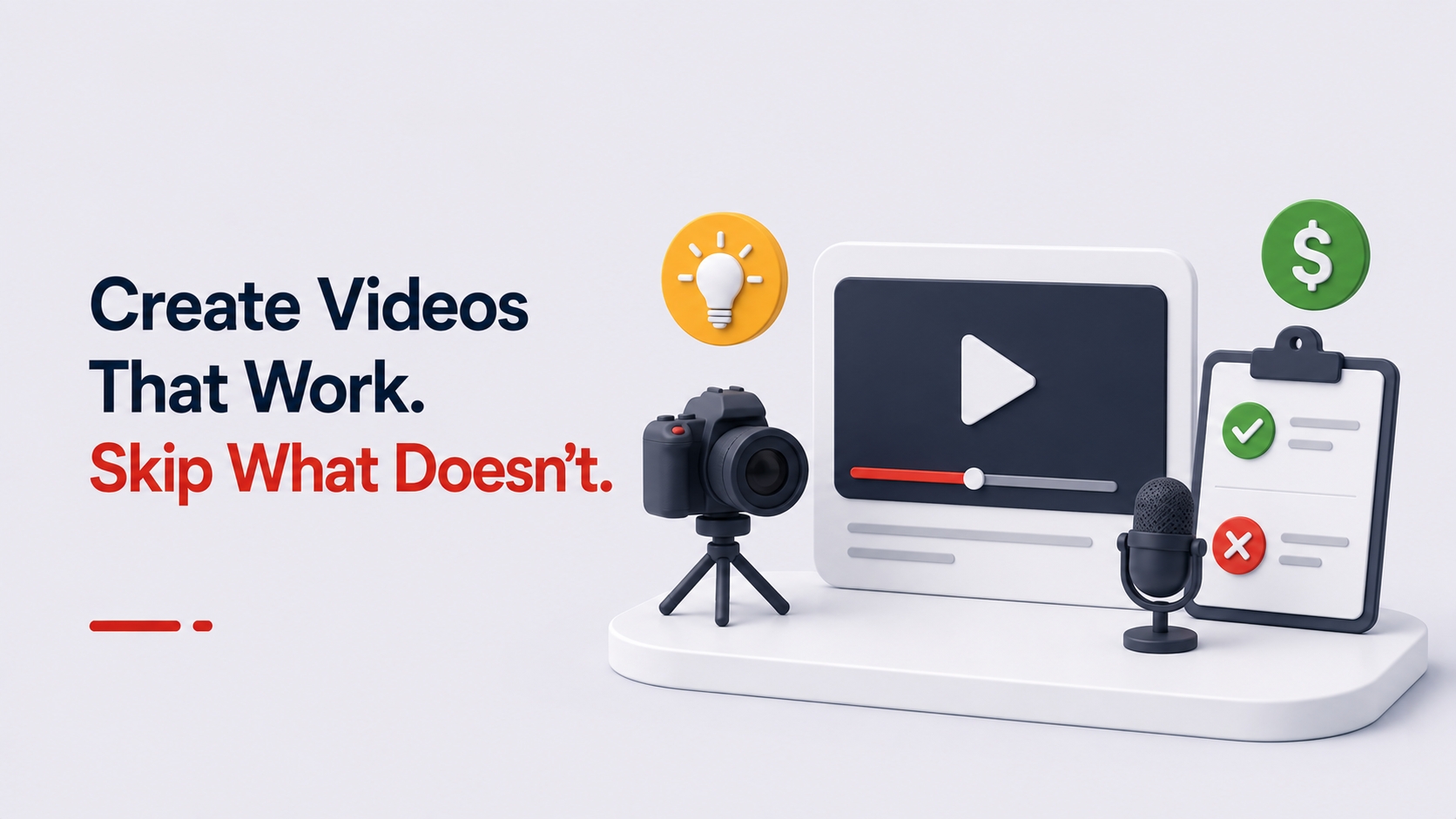
Video Marketing Small Business: Budget-Friendly Strategies and Smart Choices
Video marketing has become an essential component for businesses of every size, yet small businesses often struggle with where to begin. Many feel pressure to produce professional videos, fearing prohibitive costs or lack of expertise. Yet, with the right marketing strategy, you can start with confidence, create real impact, and avoid unnecessary spending. This detailed guide addresses what works, what doesn’t, and how you can make the most of your resources to achieve strong video marketing ROI.
Understanding Video Marketing for Small Business
Whether you run a bakery, a B2B consultancy, or an AI marketing operations platform, video content can power your brand’s story and fuel growth. The rise of smartphones and marketing automation suite tools has removed many old barriers. Now, a focused approach using low budget video production means you can connect directly with your market. The first step is to understand your audience’s needs and how video fits into your marketing funnel. Create material that solves problems, answers common questions, or demonstrates your product in action. Videos can turn cautious visitors into interested leads and loyal customers.
What Video Formats Deliver Maximum Value?
Choosing the right type of video is central to any marketing strategy. Here are the formats that punch well above their weight without demanding a full studio.
Explainer Videos
Explainer videos consistently offer outstanding video marketing ROI for small businesses. They simplify complex ideas, engage viewers and set your offering apart. The average explainer video cost is now within reach for most businesses thanks to new tools and marketing automation. One explainer video, if scripted wisely, can anchor entire campaigns and answer your prospects’ top questions in two minutes or less.
Short Form Video
Adopting a short form video strategy saves time and delivers high engagement. Videos under 60 seconds are more shareable and work well on channels like LinkedIn, YouTube Shorts, and Instagram. For B2B video content ideas, focus on tips, client testimonials or product highlights. These snackable videos build authority and trust without asking much from the viewer or your budget.
Customer Testimonials
Authenticity makes customer testimonials powerful. Record quick interviews or ask for user-generated content to capture genuine feedback. This format doesn’t demand much editing, and even smartphone footage can be effective. Place these videos at mid-point in your marketing funnel to reassure hesitant prospects and support your AI marketing strategy.
How-To and Demonstrations
Audience education should be central in your marketing strategies. How-to videos clarify use cases and showcase product benefits. Keep them focused and address one subject per video. Whether showing software steps or unboxing hardware, these tutorials offer ongoing value in search and on social channels.
Thought Leadership Clips
Positioning founders or team members as industry voices can raise credibility quickly. Record short videos answering burning industry questions, responding to news or commenting on trends. Distribute them on LinkedIn and embed them within your blog or landing page.
Formats and Tactics to Skip (or Approach with Caution)
Not all content types suit every business or budget. Understanding what to skip saves both money and time.
Overproduced Brand Films
Hollywood-level brand films drain resources fast and rarely yield commensurate video marketing ROI for small businesses. Professional but simple lighting and clear audio offer greater returns than cinematic effects or exotic locations. Focus your energy on content strategy rather than complex filming techniques.
Viral Stunts
Going viral remains unpredictable. Large brands can afford the risk, but small businesses can’t. Viral attempts may even distract from your real value proposition. Instead, concentrate on a consistent short form video strategy and repurposing valuable footage.
Long-Form Documentary Pieces
While documentaries showcase depth, they often exceed the attention span of most audiences unless you have an already loyal following. For most businesses, shorter, targeted content delivers stronger outcomes than lengthy, resource-intensive projects.
Essential Gear and Software: Spend Wisely
Technology often intimidates new video marketers, yet starting simply can yield impressive quality. Smartphones released in the past two years shoot video good enough for nearly every application. Invest instead in a tripod, clip-on microphone, and a ring light. Affordable video editing tools like DaVinci Resolve, Adobe Premiere Rush, or even Canva for basic edits can handle your needs. For scheduling and repurposing, a marketing automation suite with video content calendar features becomes extremely helpful, letting you plan and publish seamlessly across platforms.
How Long Should a Marketing Video Be?
Attention spans are shrinking and platforms favour brevity. Most successful videos today fall between 15 seconds and two minutes, depending on placement and purpose. Explainer videos average 60-90 seconds. Short form video strategy recommends lengths under one minute, especially for social channels or YouTube Shorts. For product demos or thought leadership, two to three minutes can work on a landing page. Evaluate each video’s purpose, then test and refine for each channel. Hook your audience instantly, get to the point, and finish with a clear call-to-action.
Scriptwriting: Sounding Natural Not Scripted
Many struggle with avoiding a robotic tone when scripting. Start with bullet points and talk through your message conversationally. Use the same language your customers do, reflecting both brand voice and audience needs. Practise out loud and record several takes, allowing for genuine phrasing and inflexion. Avoid over-complicating sentences and eliminate jargon. Involve your team in a marketing workshop setting to rehearse key messages and sharpen delivery, then stick to a high-energy, authentic approach. Edit ruthlessly, always keeping the main point obvious and snappy.
Where Should Video Sit in the Funnel?
To maximise video marketing ROI, align each video to your marketing funnel stage. Awareness stage videos (short form, thought leadership, explainers) draw attention and position your brand as a solution. Consideration stage videos (demos, testimonials, FAQs) help prospects evaluate and reduce risk. Decision stage content (onboarding, customer case studies) reassures buyers and improves retention post-sale. Leverage your AI marketing strategy or AI marketing operations platform to tailor video messaging and placement for each segment, boosting effectiveness with minimal waste.
Channel Optimisation: LinkedIn, YouTube, Landing Pages
Content placement affects both reach and impact. LinkedIn excels for B2B video content ideas, particularly educational or expert-led clips. Algorithms reward native videos, so upload content directly rather than linking externally. On YouTube, focus on discoverability with keyword-driven titles and video SEO YouTube best practises. Longer evergreen tutorials and explainer content tend to perform well, especially when you maintain a consistent upload schedule. Use your video content calendar to plan this in advance. Landing pages benefit from concise, high-conversion videos such as testimonials or quick introductions. Here, placement above the fold ensures your message is seen instantly, supporting your core marketing strategies.
Measuring Success and Improving Video Marketing ROI
Assessing whether video is working means going beyond counting views. Engagement rates, watch time, click-through percentages and conversions provide richer insight. When you pair these with your marketing automation tools, you see not only how many people watched, but how video influences pipeline growth and lead quality. Benchmark your results against industry standards and use A/B testing to refine content format, length, and placement. Don’t ignore qualitative feedback either. Comments, shares, and sales conversations reveal where your audience sees value or confusion. Integrating data from platforms like YouTube, LinkedIn, or your website’s analytics dashboard into your reporting gives you a full view of your progress, letting you optimise future marketing strategies for even higher impact.
Maximising Output: Repurposing and Scaling Video Content
Squeeze more from every shoot by planning content repurposing upfront. Record a detailed product demo, then cut it into bite-size tips, testimonials, or FAQs for multiple short form video strategy touchpoints. Use transcript software to turn video audio into blog posts, social content, or email copy. Building a video content calendar lets you visualise how one single shoot can fuel campaigns across a month or quarter, saving both time and money. Marketing automation tools can then help distribute these assets at the optimal time on each channel. By embracing this efficiency-first mindset, you support both low budget video production and sustainable growth without increasing your headcount or workload.
Future Trends in Small Business Video Marketing
The landscape continues to shift as new AI and automation features lower the bar to entry. AI-powered scripting, instant subtitling, or auto-editing will become mainstream, helping businesses with no production background compete at a professional level. Video SEO YouTube optimisation remains key as search algorithms increasingly prioritise visual content. Adopting these technologies and best practises ahead of the curve will give you a measurable edge. Focus on continuous learning, practical experimentation, and regular participation in a marketing workshop environment to stay current. By prioritising clarity, alignment with marketing strategy, and practical execution over perfection, you ensure long-term success and growth.