
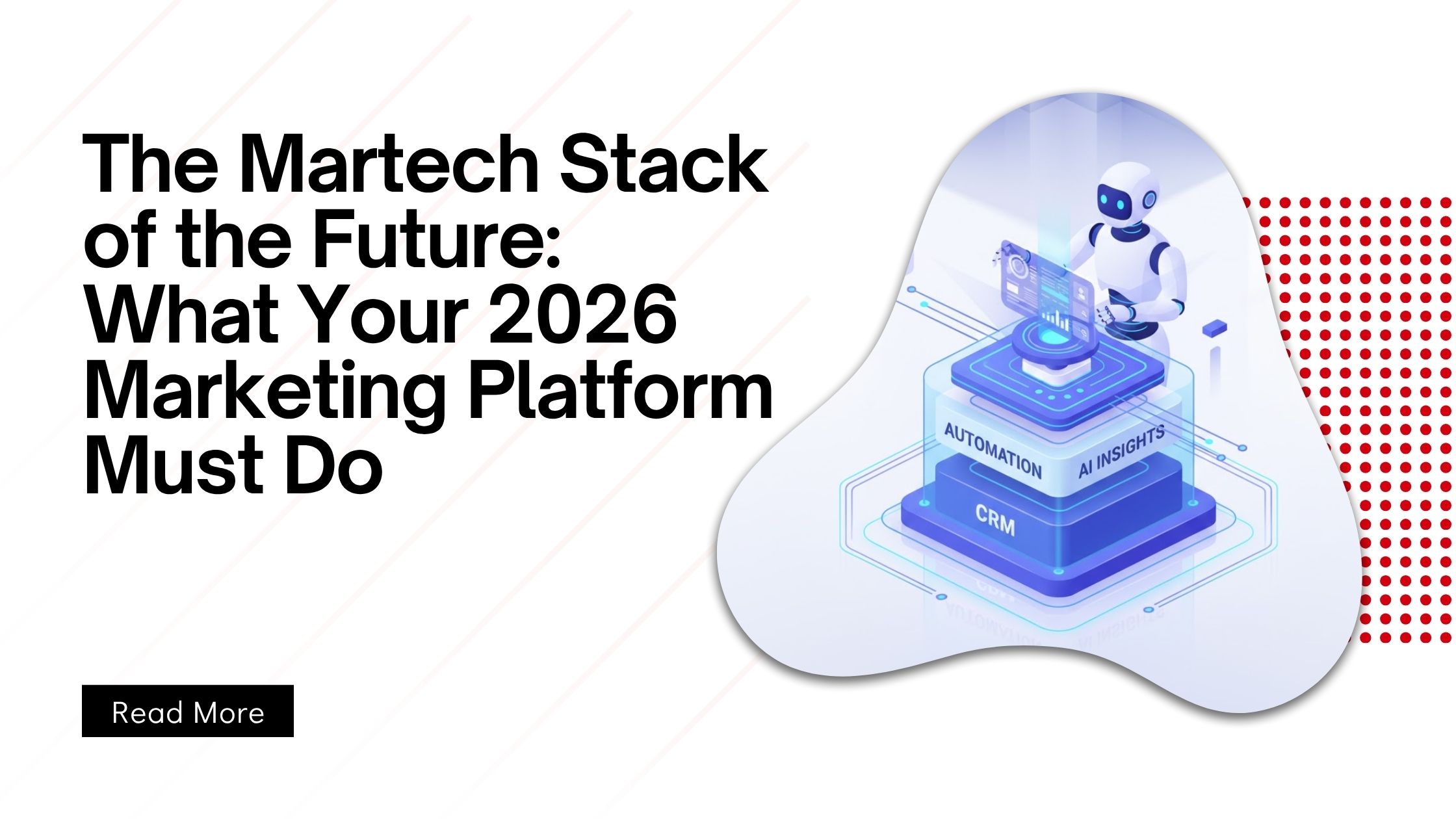
The Martech Stack of the Future: What Your 2026 Marketing Platform Must Do
The value of a robust martech stack continues to rise as marketing teams face mounting demands for efficiency, data-driven decision making and precise campaign execution. Modern professionals expect their marketing platform to handle increasingly complex tasks, yet remain easy to use and agile enough to meet changing business goals. The rapid advancement of artificial intelligence, data unification and automation orchestration is now driving new standards for what the martech stack of 2026 must achieve. As we look ahead, aligning your technology choices with these trends will decide your marketing department’s agility, efficiency and business impact.
Architectural Shifts: Unified Data Platforms and Real-Time Analytics
Martech stacks have shifted from fragmented tools toward truly unified platforms. By 2026, unified data is the backbone for scalable marketing efficiency. Disconnected tools create data silos that slow campaign decisions and obscure performance reporting, costing companies time and opportunity. Professionals now demand platforms that consolidate inputs from CRM, social, email and advertising systems directly into a single hub. This unified data approach enables more accurate attribution modeling, seamless campaign execution and ultimately higher return on investment.
Real-time analytics power this transformation. When every data touchpoint feeds into an integrated system, real-time dashboards display the impact of each campaign. For example, a Digital Dashboard centralizes all key performance indicators, tracks spend and instantly correlates activities with real business outcomes. The ability to measure and optimize performance as it happens is not only desirable but essential. Marketing efficiency skyrockets when teams no longer need to await monthly reports or manually reconcile campaigns and spending. A modern marketing platform must provide straightforward, real-time analytics dashboards that drive timely decision making across organizational levels.
Role of the Central Hub: Robotic Marketer as the Command Center
Rather than continuing to manage a maze of point solutions, leading organizations rely on a single central platform to manage all core functions. In the 2026 martech stack, this central platform acts as the “brain” by connecting data streams, campaign tools and reporting – a sharp strategic move for marketing efficiency. Professionals seek to minimize tech sprawl, cut overlapping subscription costs and reduce integration headaches. A unified central hub system aligns with business objectives and streamlines strategy execution, reducing both operational friction and room for error.
This is where solutions like Robotic Marketer deliver maximum value, serving as the organizing core for marketing activities. The platform empowers users to develop AI Marketing Strategy recommendations in minutes, then push campaigns through the Intelligent Campaign Tool. The Digital Dashboard ensures that all stakeholders gain a transparent, real-time view of impact and spend. By serving as a command center, the platform enables both granular control and broad visibility, bridging gaps between marketing, sales and business goals. With this approach, vendor selection for 2026 becomes a question of integration quality, predictive analytics capability and platform scalability rather than one-off features.
Automation & Orchestration: Moving Beyond Point Solutions
Point solutions offer targeted functionality but often lead to fragmented workflows. By contrast, automation orchestration within a unified platform replaces disconnected tools and manual interventions with streamlined, adaptive processes. Automation no longer means just scheduling emails or posts. The leading marketing platform for 2026 uses automation orchestration to align every campaign touchpoint from strategy creation to performance reporting.
The Intelligent Campaign Tool exemplifies this integration. It automates the sequencing of campaigns across channels, underpinned by insights from unified data sources. Routine tasks—like updating content calendars, scheduling social posts or setting budgets—can be fully automated, freeing teams to focus on optimization and ideation. End-to-end workflow management boosts marketing efficiency, helping agile organizations do more with fewer resources. Automation orchestration also allows for fast pivots if campaign data reveals the need to reallocate spend or adjust messaging. This orchestration depends on platforms that unify data, manage strategy and optimize resources in one integrated experience.
AI-Driven Insights and Predictive Analytics in the Modern Stack
Predictive analytics increasingly sits at the heart of data-driven marketing. In 2026, marketing professionals use platforms equipped with AI-driven insights to anticipate audience needs, forecast campaign performance and guide allocation of resources. These features go well beyond historical reporting: Predictive analytics leverages unified data to forecast trends, identify at-risk segments and detect emerging opportunities before competitors see them.
AI Marketing Strategy modules build precise, consultant-grade strategies by interpreting both internal business data and external market shifts. Predictive analytics recommend budget allocation by channel, content focus and even optimal messaging timing, helping professionals design strategies rooted in future performance instead of just past patterns. By integrating predictive analytics in the campaign lifecycle, marketing efficiency moves from “guess and check” to fine-tuned optimization with confidence in every decision.
The marketing platform of 2026 must integrate predictive analytics seamlessly with execution features. Teams should be able to adjust plans dynamically as real-time analytics suggest new opportunities. For example, as an Intelligent Campaign Tool identifies a spike in engagement from a particular audience segment, predictive analytics can recommend adjusting spend or creative assets in the moment. This combination of AI-driven insights, automation orchestration and unified data represents the ultimate engine for marketing success and efficiency.
Budgeting and Vendor Selection Criteria for the Future
The 2026 martech stack faces a different budgeting and procurement reality. Leaders now prioritize total cost of ownership, integration potential and sustainability over shiny new features. Vendor selection processes increasingly focus on evaluating how seamlessly each platform consolidates workflows and plugs into the broader enterprise stack. In this shift, the value lies not in dozens of niche tools, but in identifying robust, expandable marketing platform options. Budgeting efficiency comes from investing in fewer systems that cover more ground.
Professionals should demand clear vendor roadmaps with regular updates, strong support, easy onboarding and robust predictive analytics capabilities. Modern marketing efficiency measures directly to ROI: Vendor selection decisions must weigh hard data about platform-driven growth, not just anecdotal reviews. Open APIs and flexible data integration capability are key requirements to ensure new systems do not lock teams into future compatibility challenges. As budgets tighten and accountability climbs, organizations that make informed vendor selection decisions are positioned to lead in both strategy and bottom-line results.
Features That Define the Martech Stack 2026
Expectations for the martech stack of 2026 are high, but so are the opportunities for teams ready to adapt. Key features that define an impactful marketing platform begin with AI-driven planning, where intelligent automation and predictive analytics collaborate to deliver bespoke marketing strategies in minutes. Unified data infrastructure is foundational for eliminating silos and supporting holistic attribution, real-time optimization and compliance at scale.
Automation orchestration takes center stage by centralizing the management of touchpoints while also providing teams with templates, benchmarks and recommended best practices. The Intelligent Campaign Tool automates multichannel execution with self-adjusting workflows, ensuring continuous efficiency even as market conditions shift. The Digital Dashboard gives every stakeholder clear visibility into what’s working, why and at what cost.
Marketing platforms of the future natively support cross-channel content creation, automated asset optimization and easy syndication to preferred channels. Professionals must expect seamless SEO optimization, direct publishing features and real-time reporting as the standard suite of features. A strong marketing platform also places security, compliance and regional data protections at its core.
Best Practices for Maximizing Marketing Efficiency
To make the most out of the next-generation martech stack, professionals must develop processes around regular data hygiene, ongoing optimization and continuous skill building. Investing in staff training ensures that teams fully use AI Marketing Strategy modules, predictive analytics dashboards and automation workflows. Establishing a culture of performance measurement—where the Digital Dashboard becomes the reference point for all marketing meetings—reinforces accountability and drives smarter decisions.
Another best practice involves collaborating closely with IT and sales to ensure all relevant systems feed unified data into the marketing platform. Cross-functional alignment reduces manual data transfer, improves quality and deepens the impact of predictive analytics. Teams can then use the Intelligent Campaign Tool to rapidly pivot campaigns based on live market signals or evolving sales priorities. This agility and efficiency forms the bedrock for sustained growth and market relevance.
Vendor selection remains a continuous process as the space matures. Regularly review your stack against organizational goals, emerging platform capabilities and new integration opportunities. Stay informed on best-in-class use cases for platforms advancing AI-powered marketing, automation orchestration and Digital Dashboard innovation.
Looking Ahead: Trends Influencing Martech Stack 2026
Several emerging trends will shape the future of marketing platforms. Chief among these is the ongoing convergence of sales, service and marketing technology. Platforms that break down walls between business functions by sharing unified data, predictive analytics and campaign insights create new agility for professionals. Rising expectations for privacy compliance and transparent reporting data are also shifting platform must-haves, especially as regional legal frameworks continue to tighten.
Self-service automation orchestration will empower teams to manage campaigns more independently, without constant vendor or IT intervention. As the number of channels and formats grows, martech systems must also automate asset adaptation and personalization without manual rework. Finally, the ongoing rise of AI-driven planning tools will force reevaluation of team structures, workflows and measurement systems to maximize opportunity from predictive analytics and real-time execution.
Ultimately, the winners in this new marketing era will be those who equip their teams with the tools, processes and data foundation necessary for genuine marketing efficiency. By leading with the right platform, professionals can anticipate change, exceed business goals and elevate the strategic value of the marketing function.