
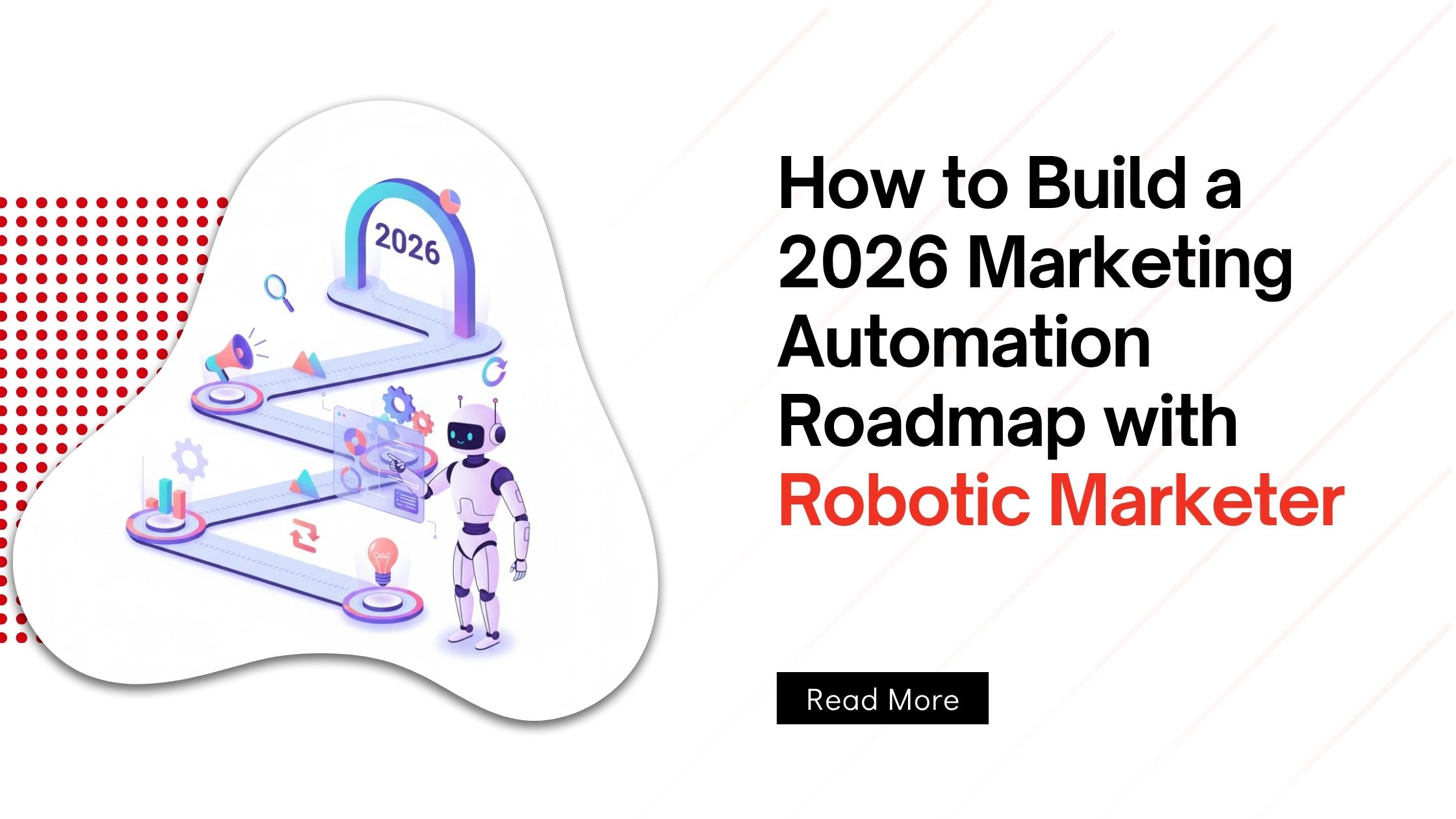
How to Build a 2026 Marketing Automation Roadmap with Robotic Marketer
Marketing departments across industries face increasing pressure to drive performance while reducing complexity. As digital initiatives grow, professionals must navigate sophisticated technologies and evolve their strategies to capture value in a crowded marketplace. Developing a comprehensive marketing automation roadmap for 2026 can determine whether teams reach their objectives or get left behind. Relying on advanced solutions such as an AI Marketing Strategy, an Intelligent Campaign Tool and a Digital Dashboard helps teams design efficient, resilient operations that balance innovation and sustainability. The following guide provides actionable insights to create an effective automation plan, prioritize change management and enhance marketing efficiency using the Robotic Marketer platform.
Understanding Marketing Automation Roadmaps for 2026
A marketing automation roadmap is more than a project plan. It establishes a unified vision for how digital tools and strategies can align with business goals, customer expectations and operational realities. As organizations prepare for 2026, planning must emphasize integration between technology and talent while enabling rapid scaling and precise targeting. Teams equipped with frameworks that prioritize martech integration, content workflow, marketing efficiency and data-driven strategies outperform peers who rely on AD hoc or legacy processes.
Forward-thinking professionals must remain aware of key market shifts, including the accelerated adoption of AI‑powered automation, demand for actionable insights and a relentless focus on ROI. Achieving marketing excellence demands a blend of creativity and analytics, supported by agile automation assets designed to deliver value at every stage of the customer journey. Developing your roadmap in 2025 with foresight into future trends ensures you can adapt, respond and thrive as marketing automation evolves.
Determining Automation Maturity Levels Among Teams
Before crafting a marketing automation roadmap, professionals need a clear understanding of their current automation maturity. This foundational exercise helps chart the right trajectory. By using systematic audits and the Robotic Marketer platform’s analytics, teams can objectively assess their automation capabilities. Start by evaluating how consistently automation is integrated into your AI Marketing Strategy. Assess core aspects such as workflow automation, data management, campaign orchestration and measurement practices.
Maturity falls into three general stages. First, early automation adopters typically have isolated efforts, relying on disconnected tools and manual processes with limited integration. Second, maturing teams invest in platform-based automations with more advanced Intelligent Campaign Tools, linking channels and gathering performance data. Finally, leading organizations approach full process integration. They leverage Digital Dashboards, continuous optimization and AI‑powered automation to manage content workflow, measure ROI and scale personalization across markets. Identifying your current maturity level clarifies benchmarks and guides realistic planning for 2026.
Defining Key Milestones and Phases for a 2026 Marketing Automation Roadmap
Effective automation roadmaps specify distinct milestones and phases to guide transformation over time. These benchmarks enable professionals to visualize success, allocate resources and navigate the iterative nature of change management. For organizations aiming to reach advanced automation by the end of 2026, several key phases form a foundational strategy.
The first milestone involves consolidating existing tools and data sources. Use the Robotic Marketer platform to centralize information, reduce system fragmentation and prepare for future integrations. Next, advance to process automation by adopting Intelligent Campaign Tools that schedule, execute and optimize marketing touchpoints without manual intervention. A third milestone focuses on scaling AI‑powered automation, embedding advanced algorithms in your content workflow for hyper-personalization and performance tracking.
In the final phase, teams achieve full martech integration and marketing efficiency. Digital Dashboards provide unified visibility, real-time analytics and KPI tracking to refine strategies continuously. Regular training, agile change management and platform evolution help maintain momentum. Mapping these milestones to a timeline from 2025 through 2026 creates structure, builds accountability and ensures teams maintain focus on strategic outcomes.
Martech Integration: Connecting Your Automation Platform to Business Systems
Integrating your marketing automation roadmap with a broader martech stack is essential for long-term impact. Martech integration encompasses synchronizing your main automation platform, such as the Robotic Marketer platform, with CRM, CMS, analytics suites and other core apps. This interconnected ecosystem increases data accuracy, eliminates silos and enables sophisticated campaign coordination.
Professionals should start by mapping the flow of customer data from capture to conversion. Automate the transfer of leads from marketing forms to your CRM and connect engagement data to analytics dashboards. Next, synchronize content planning systems with your Intelligent Campaign Tool to automate the publication and sequencing of multi-channel assets. Leverage native integrations, APIs and customizable workflows to support martech integration tailored to your operational environment.
Strong martech integration improves marketing efficiency by automating repetitive tasks, personalizing experiences and providing clearer measurement. By the end of 2026, high-performing companies will have deployed platforms that speak to each other, creating a seamless content workflow, transparent ROI measurement and more responsive strategies.
AI Marketing Strategy for Future-Proofed Automation
Building a forward-looking AI Marketing Strategy forms the backbone of a modern marketing automation roadmap. By 2026, AI’s ability to generate insights, empower dynamic content workflow and guide channel allocations will only increase. Professionals should use platforms that combine machine learning, big data and business intelligence to conduct deep market analysis, refine audience segmentation and optimize budget allocations.
Develop a process for continuous input into your AI models. Feed the system with campaign data, audience responses and sales outcomes. Allow the platform to detect trends, predict engagement and suggest improvements. Align these AI-driven insights with the company’s sales and business objectives. When blended with Intelligent Campaign Tools and Digital Dashboards, AI strategies amplify marketing efficiency, adapt to consumer behaviors and reduce manual oversight.
Equipping your team for this AI-powered future requires technical literacy, a growth mindset and the flexibility to trial new approaches. Incorporate ongoing experimentation into your roadmap, ensuring that innovation and testing receive dedicated resources at every phase.
Change Management: Skills and Culture for a Modern Marketing Function
No automation roadmap can succeed without deliberate attention to change management. Simply deploying technology will not deliver marketing efficiency unless professionals champion ongoing learning and organizational alignment. The transition to AI‑powered automation and continuously optimized content workflow requires new competencies, from data interpretation to agile project coordination.
Begin by assessing the current skill levels and organizational culture. Identify gaps in data fluency, martech proficiency and campaign management. Implement a training program for upskilling in automation tools, data analytics and digital content creation. Establish a shared vision for marketing automation across all relevant stakeholders, involving leaders from marketing, sales, IT and operations.
Foster a culture that values agile adaptation and feedback. Recognize that some resistance is natural when introducing Intelligent Campaign Tools and Digital Dashboards. Transparent communication, pilot testing and iterative development can ease the transition and strengthen buy-in. By prioritizing change management throughout your planning for 2026, marketing automation becomes more sustainable and productive.
Scaling Marketing Efficiency and Content Workflow Across Channels
Gaining marketing efficiency depends on standardizing and scaling high-performing processes while maintaining quality and consistency. A powerful Digital Dashboard can provide visibility into performance across every channel so teams can quickly allocate resources, identify areas for improvement and respond to trends. By monitoring every step of the content workflow, leaders can ensure deadlines are met and messages resonate with target audiences.
Develop clear protocols for automating the creation, review and publishing of blogs, landing pages and social posts. Use your Intelligent Campaign Tool to sequence campaigns, track conversion rates and optimize timing. Incorporate automated quality assurance processes, applying best-practice SEO optimization and consistent brand guidelines to every campaign.
Success at scale requires investing in automation platforms that handle complexity, reduce manual tasks and maintain transparency. Leverage centralized dashboards to track KPIs, manage budgets and coordinate cross-functional collaboration. Over time, these systematic improvements drive measurable gains in marketing efficiency and team capacity.
Measuring ROI and Delivering Continuous Improvement
ROI measurement is a non-negotiable element of any marketing automation roadmap. Professionals must establish a data-driven approach to evaluating the impact and efficiency of each campaign. Integrating robust analytics within the Robotic Marketer platform and a real-time Digital Dashboard provides the foundation for actionable evaluation.
Regularly monitor primary KPIs such as lead generation, engagement rates, cost per acquisition and revenue contribution. Use these insights for ongoing optimization, linking investment in AI Marketing Strategy and Intelligent Campaign Tools directly to business outcomes. Benchmark performance against industry standards to identify opportunities for further automation or cost savings.
Encourage an iterative approach, where feedback, new data and technological advances inform strategic adjustments. By continuously refining processes and strategy, your organization sustains efficiency gains and competitive advantage through 2026 and beyond.
Building Long-Term Value Through Robust Change Management
Enduring marketing automation success depends on the ability to scale, adapt and innovate as conditions shift. Change management for 2026 must go beyond incremental updates. Forward-looking teams continuously reassess talent needs, retrain professionals in automation best practices and update their martech stacks to take advantage of new capabilities within the Robotic Marketer platform.
Effective leadership sets the tone for successful automation adoption. Offer incentives for upskilling and reward teams that pioneer impactful process changes. Structure internal communications to keep everyone informed about roadmap progress, automation milestones and performance results. By institutionalizing agile methodologies and fostering a mindset of proactive learning, marketing organizations consistently outperform and adapt to the demands of future markets.
Harnessing the Power of the Robotic Marketer Platform and Related Tools
Leveraging an integrated platform connects strategy, content development, campaign automation and analytics into one cohesive system. Professionals benefit from AI-powered marketing strategies that adapt to shifting business needs and personalize engagements at scale. The Intelligent Campaign Tool automates the customer journey, propelling each prospect through carefully sequenced, data-informed touchpoints with minimal intervention. The Digital Dashboard, meanwhile, aggregates performance and delivers actionable insights that drive rapid decision-making.
When used in concert, these assets streamline martech integration, standardize content workflow and optimize every layer of marketing operations. Beyond technology adoption, teams must focus on disciplined execution, clear accountability and long-term upskilling to fully realize the promise of advanced automation in 2026.