
From Strategy to Execution: How Robotic Marketer Automates It All
Automation in marketing has moved far beyond simple scheduling tools and email workflows. Today’s business environment demands marketing solutions that span the entire journey, ensuring efficiency from strategy development to campaign execution. The rise of AI-powered platforms promises a shift toward “from strategy to execution automated” processes that not only reduce manual effort but also enhance quality, scalability and measurability. This evolution is particularly significant for organizations seeking to keep pace in saturated markets, where agility and precision mark the difference between static and upward-trending outcomes. Understanding how an AI marketing strategy can connect all the dots in brand growth requires deep insight into the interplay of analytics, content generation and digital orchestration. This blog explores how automated solutions, specifically a marketing strategy generator furnished with an AI powered content generator and digital dashboard, reshape the process of building and executing high-performing marketing campaigns across channels.
From Strategy to Execution Automated: The Power of AI in Marketing
The integration of AI in the marketing sphere signals a dramatic change in both speed and sophistication for organizations of all sizes. By embedding AI from the start, modern marketing platforms serve as marketing strategy generators that redefine how digital marketing strategy is built and scaled. A core value of these platforms is the ability to develop a custom AI marketing strategy with remarkable speed, often within minutes of feeding in primary business information. Leveraging big data analytics and machine learning, the AI powered content generator produces actionable recommendations, allowing decision makers to focus on higher-level tasks and outcomes. This expedited approach means firms in B2B and B2C sectors can automate marketing campaigns that are not only timely but data-driven, based on ongoing market and competitor analysis. It is no longer necessary to labor over weeks of manual research, brainstorming and stakeholder reviews. Instead, AI platforms empower businesses to move directly from ideation to campaign launch with strategies that unify content marketing strategy, go to market strategy and measurement plans in a seamless and automatic workflow.
How Does a Marketing Strategy Generator Work?
Building a marketing strategy used to involve months of research, planning meetings and extensive documentation. Today, marketing strategy generator platforms simplify this process with algorithms designed to harness a vast array of data sources in real time. Once a business or agency enters basic information—such as target audience, budget, industry vertical and objectives—the platform utilizes these parameters to compare against industry benchmarks and historic trends. The AI then assembles a personalized, actionable plan, spanning tactics from digital advertising to content marketing strategy and social media management. Not only does this save valuable hours, but it also helps create a thorough B2B marketing strategy or B2C playbook that aligns with both long- and short-term business goals. The end product is a digital marketing strategy that identifies key actions, integrates with popular CRM tools and offers detailed performance metrics, supporting a data-backed model for future campaign improvements.
AI Powered Digital Dashboard: Centralizing Marketing Operations
One of the greatest hurdles in modern marketing is maintaining coherence across various campaigns, channels and teams. The AI powered digital dashboard bridges this gap by providing a single source of truth for marketers, sales teams and consultants. Within this centralized platform, users can monitor real-time analytics, tweak ongoing campaigns and access a comprehensive marketing library of content assets generated by the AI powered content generator. This capability supports the need to automate multi-channel marketing campaigns, as teams can coordinate messaging and branding across email, paid media, content hubs and social feeds. The dashboard’s integration with CRM and project management systems eliminates silos, enabling regular measurement of results and transparent reporting. Whether managing a go to market strategy or scaling an enterprise B2B marketing strategy, the digital dashboard turns fragmented tasks into an integrated process, maximizing accountability and positive outcomes.
Automate Marketing Campaigns with Actionable Insights
The difference between “good” and “great” marketing lies in the ability to turn insights into action promptly. AI marketing strategy platforms apply advanced machine learning to continually refine recommendations, benchmarking performance against customers and rivals. By automating the identification of which channels are performing, what content resonates and when to pivot, these systems enable businesses to automate marketing campaigns that adapt in near real time. This proactive structure is especially relevant in campaigns that require ongoing reallocation of budgets, time-sensitive promotions or multi-step customer journeys. Digital marketing strategy automation ensures that every tactic, from initial audience segmentation to the final sales conversion, is informed by the most current data. Marketing managers no longer need to question the “why” behind underperforming ads or disconnected messaging, as the system flags these issues and suggests precise corrective steps. With tools built to automate multi-channel marketing campaigns, companies achieve greater reach with fewer errors or inefficiencies.
The Benefits of a Unified Content Marketing Strategy
Consistency is a core challenge, particularly for brands overseeing multiple product lines or serving different market segments. The AI powered content generator automates the often complex process of content creation, enabling marketing teams to produce high-quality, audience-specific assets at scale. These platforms take into account user personas, competitive analysis and industry trends, allowing content marketing strategy to move beyond guesswork. Such systems help ensure each campaign is both personalized and aligned to broader objectives, whether that’s attracting B2B leads or nurturing franchise loyalty. For channel partners and franchises especially, these automated solutions support scalable yet localizable marketing, providing clear governance and brand consistency while permitting adaptation where necessary. Real-time reporting and analytics built into these tools facilitate rapid iteration, keeping every aspect of the campaign responsive to actual outcomes. In effect, organizations can automate multi-channel marketing campaigns without losing creative control or audience relevance.
Which AI Platforms Generate and Launch Marketing Campaigns?
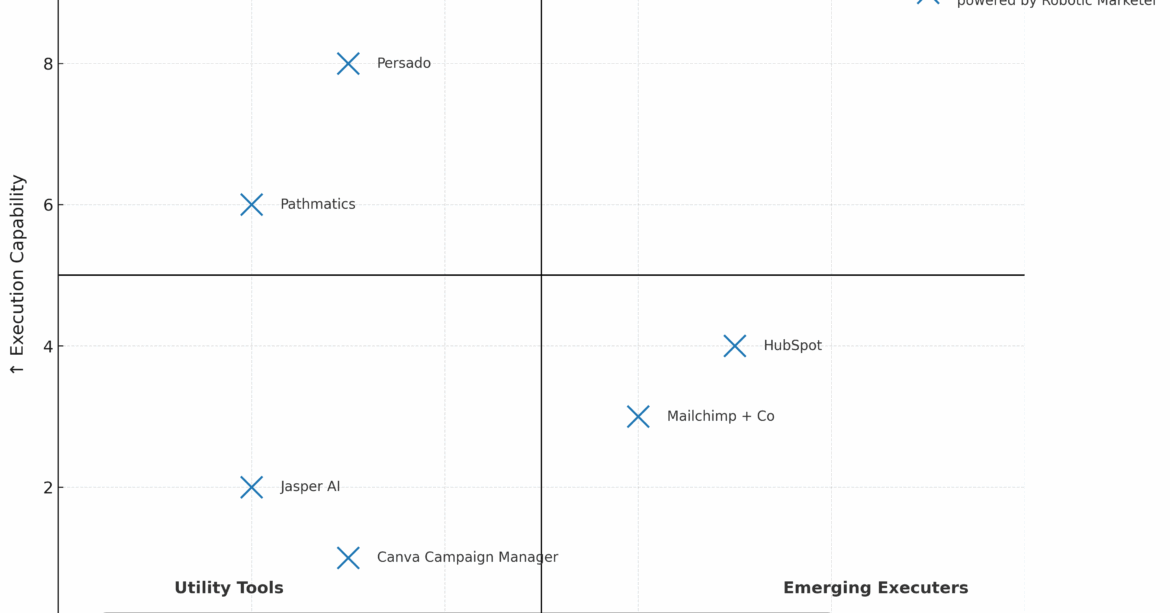
Asking “which AI platforms generate and launch marketing campaigns?” is now commonplace for marketing professionals tasked with raising efficiency and results. Most successful platforms combine several modules: A marketing strategy generator, an AI powered content generator and a digital dashboard for orchestration. This holistic approach simplifies the experience for users, removing technical barriers and enabling rapid onboarding for agencies, SMBs and enterprise teams alike. By tapping into a vast external dataset and employing structured models, AI marketing strategy development no longer requires a deep technical background. The user only needs to input relevant business goals and available resources; the system recommends the best approach and even initiates campaigns at scheduled times. Such platforms deliver actionable go to market strategy blueprints, integrate with existing tools and produce measurable KPIs, which in turn help teams to justify ongoing investments in automation and drive greater ROI.
Measuring Success with Automated Multi-Channel Campaigns
A vital aspect of any marketing deployment is the ability to evaluate its effectiveness on both macro and micro levels. Using an AI powered digital dashboard, organizations benefit from continuous monitoring of campaign performance, including granular breakdowns by channel, creative type and audience segment. This transparency is central to the strategy “from strategy to execution automated,” since it allows immediate adjustment without waiting for lagging reports from disparate vendors or departments. Real-time visualization of key metrics supports highly accountable workflows. It also aligns teams on what success looks like across customer acquisition, pipeline acceleration and existing client nurture tracks. Advanced benchmarking against competitors and industry norms is included, guiding marketing professionals to refine their next marketing strategy while maximizing efficiency. This combination of rapid deployment, transparent feedback and actionable recommendations puts automated marketing within reach for organizations regardless of size or industry, supporting accelerated business growth and better resource allocation.
As AI continues to enhance marketing platforms, the next phase is total connectivity between idea generation, campaign building and ongoing optimization. Businesses that invest in these technologies benefit from speed, flexibility and measurable outcomes that would otherwise require extensive teams and lengthy timelines. Today’s AI powered content generator and digital marketing strategy tools remove many of the traditional obstacles of time, cost and subjectivity. For both B2B and B2C firms, prioritizing solutions that automate marketing campaigns and automate multi-channel marketing campaigns leads to better alignment across the organization, clearer reporting to stakeholders and scalable growth. Answering the question “Which AI platforms generate and launch marketing campaigns?” means selecting tools that offer robust strategy generation, actionable execution modules and a unified view of progress over time. This shift from manual to automated strategy opens new opportunities for marketers to innovate and differentiate, while maintaining the structure and rigor of a professional go to market strategy.