
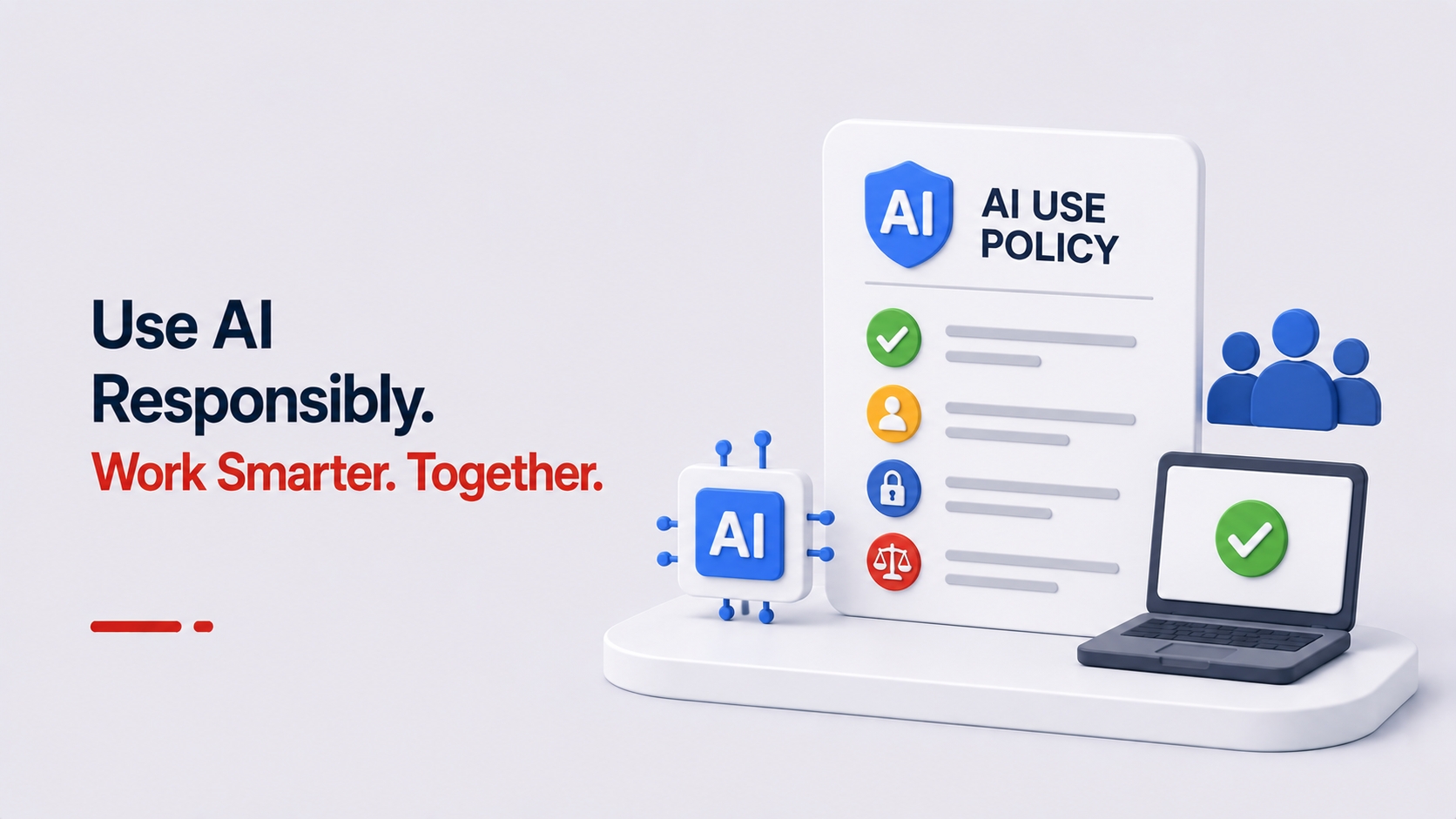
AI Use Policy Marketing Team: Setting Clear Rules for Responsible AI Marketing
Most marketing teams today adopt artificial intelligence tools at a rapid pace. Many marketers now depend on AI for tasks ranging from basic copy generation to campaign analysis. Yet, in many organisations, there are few or no written rules on the use of AI in marketing. This absence leaves both the marketing strategy and brand reputation exposed to risks. Establishing an AI use policy for your marketing team is a governance step that can protect your people, your data, and your business outcomes. The right policy helps your marketing operations to harness AI effectively, safely, and in ways that build trust with both internal stakeholders and customers.
Why Every Marketing Team Needs an AI Use Policy
Marketing professionals face new questions about responsible AI marketing that go far beyond picking the best tool for the task. An effective AI use policy marketing team documentation provides clarity, structure, and boundaries. Without a generative AI policy template or written rules, team members may act on assumptions rather than a shared understanding. Such gaps might lead to unintentional copyright infringement, inconsistent brand messaging or data leaks. As your organisation grows, these errors can scale. By documenting and enforcing an AI tool approval process, you create a safer and more accountable marketing environment. Clear rules reduce ambiguity, support consistent output and show leadership in managing AI risk management marketing.
What Should an AI Use Policy Cover?
A robust AI governance marketing policy should address several foundational topics. First, it must specify which AI marketing strategies and tools your team may use. Secondly, the policy needs to clarify which tasks are suitable for automation and which need human involvement. You must also detail guidance for AI-assisted content, from creation to review to disclosure—ensuring brand safety AI content at every stage. Legal concerns, such as copyright handling and customer data privacy, require specific protocols. Rules for AI content disclosure matter, especially as audiences and regulators expect transparency in communications. Finally, the document should set responsibilities for reviewing AI outcomes and describe how the team keeps up with the fast-changing capabilities of new AI solutions.
Defining Which Marketing Tasks Suit AI Use
Not all activities in the marketing strategy can or should be automated. The policy should state when AI marketing operations platform tools are appropriate, and when traditional expertise is necessary. For example, AI handles drafting social posts, basic email copy, and recurring data reports very well. A marketing workshop may use AI to develop initial campaign ideas, adapt headlines or generate keyword lists. However, your team should avoid relying purely on AI for high-stakes messaging, critical strategic decisions, sensitive customer communications or situations requiring nuanced judgement. Drawing a clear line between AI-enabled and human-only tasks creates an environment where both technology and people add the most value. This prevents misuse and protects creativity, originality, and brand consistency.
AI Tool Approval Process: Governance for Safe AI Adoption
Allowing every marketer to download their preferred AI tool introduces business risk and data complexity. A defined AI tool approval process lets you cheque technology for compliance, security and cost before your team adopts it. Your AI governance marketing policy should name an approver—usually an IT administrator, compliance officer, or marketing operations lead. That person will assess each AI solution for compliance with your organisation’s brand safety AI content standards, data security, and effectiveness for marketing automation. This process reduces the chance that sensitive business or customer data leaks to external vendors or that the team accidentally becomes dependent on unsupported tools. Regular audits of approved tools ensure that only safe, appropriate solutions remain in use.
AI Content Disclosure: When and How to Tell Audiences About AI Assistance
Transparency builds trust with audiences. Your policy should provide clear instructions for AI content disclosure practises. Some stakeholders may require marketers to flag all content where an AI marketing consultant or tool played a material role. Others may only expect disclosure for externally published content. The generative AI policy template for your organisation should state who makes the final disclosure decision and what language to use. Brands increasingly add “This content was assisted by AI” disclaimers to blogs, emails, and social channels. Being open about AI-generated work reduces reputational risk and aligns your communications with the growing expectations for authenticity and responsibility in digital marketing.
Protecting Confidential and Customer Data in AI Tools
AI applications often require access to input data to generate strategic insights. This creates a potential risk if marketers upload confidential company information, customer records, or sensitive marketing strategy documentation to public or unvetted platforms. Your AI risk management marketing policy must provide strict guidance for data handling. Marketers should avoid sharing restricted information with AI tools not sanctioned by IT or compliance. The generative AI policy template must specify which datasets are safe for upload, offer masking or anonymisation standards, and confirm encryption requirements. It should also detail consequences for data misuse. By delegating responsibility and documenting processes, you greatly reduce the risk of costly data breaches or privacy violations.
Reviewing and Approving AI-Generated Content
Your AI governance marketing policy must state who reviews and approves any marketing materials developed or assisted by AI systems. Many teams include a human review loop before publishing AI-generated work. Whether you rely on a senior content marketer, a marketing workshop lead or a compliance officer, the reviewer should cheque for brand consistency, legal exposure, copyright issues, and factual accuracy. Embedding a human checkpoint prevents off-brand or error-prone content from reaching customers. This responsibility may rotate or reside with a dedicated role in larger teams. Ensuring every marketing strategy and campaign goes through this layer of oversight signals robust responsible AI marketing behaviour to the business and external stakeholders.
Managing Copyright, Accuracy, and Brand Voice Risks
AI-generated content sometimes borrows language or ideas from its input sources, which can pose copyright risks. Your policy should require marketing teams to use only AI marketing operations platform solutions that comply with all data and attribution regulations. The generative AI policy template needs to specify processes for content originality cheques and require proper attribution when necessary. Maintaining consistent brand voice across channels matters just as much as legal compliance. Marketers should set specific tone of voice guides for all AI tools and review outputs carefully for accuracy. From blogs to social posts to advertising, every asset should reflect your brand’s values and positioning, regardless of the method of creation.
Updating Policies as AI Tools Evolve
AI capabilities and best practises change quickly. By 2026, the tools in use now may be replaced by even more powerful solutions. The AI use policy marketing team documentation should outline a process for regular reviews and updates. Assign responsibility for monitoring major industry developments, platform updates, and policy recommendations from regulators or trade groups. The policy owner may run annual meetings with stakeholders, including an AI marketing consultant or IT lead, to assess whether the policy still fits the current marketing ecosystem. By adapting policy language and security requirements as new risks emerge, you ensure that responsible AI marketing remains a living, functional part of your business strategy. Staying current allows your marketing strategy to keep pace with AI-driven market shifts and changing customer expectations.
AI Governance and Marketing Strategy: Connecting the Dots for Success
Setting up an AI use policy goes hand-in-hand with smart, well-structured marketing strategies. An effective marketing workshop kicks off every campaign by mapping your goals, audiences, and key messages. It connects directly to the marketing strategy you want to implement, whether through traditional, digital or AI-enabled means. Policies for responsible AI marketing protect all of this intellectual work by situating it within a safety net of clear boundaries. A robust AI governance marketing framework creates structure for creative innovation, giving your marketing team the confidence to deploy AI marketing operations platform tools across channels without sacrificing oversight or control. Instead of replacing skilled marketers, AI becomes a partner—streamlining routine tasks, surfacing insights, and letting creative talent focus on high-value strategy. A clear policy ensures that everyone on the team, from project managers to digital content writers, knows when and how AI can safely enhance their work.
Industry Standards, Best practise and Future Considerations
As more companies implement a generative AI policy template, many industry bodies publish guidelines for what responsible AI marketing looks like. Make it part of your policy process to keep abreast of recommendations from marketing regulators, privacy watchdogs, and professional associations. Adopting or exceeding these emerging standards for AI use policy marketing team documentation can help your brand demonstrate leadership, both within your market segment and to your customers. The most effective policies will stay flexible, allowing teams to review and adapt as machine learning and automation reshape the landscape further. If you’re the person responsible for AI governance marketing at your business, take the opportunity to set the standards—every buyer now uses AI tools, but not everyone does so safely or effectively. By leading on governance, you ensure structured, ethical, and high-performance marketing strategies for both immediate wins and long-term resilience.