
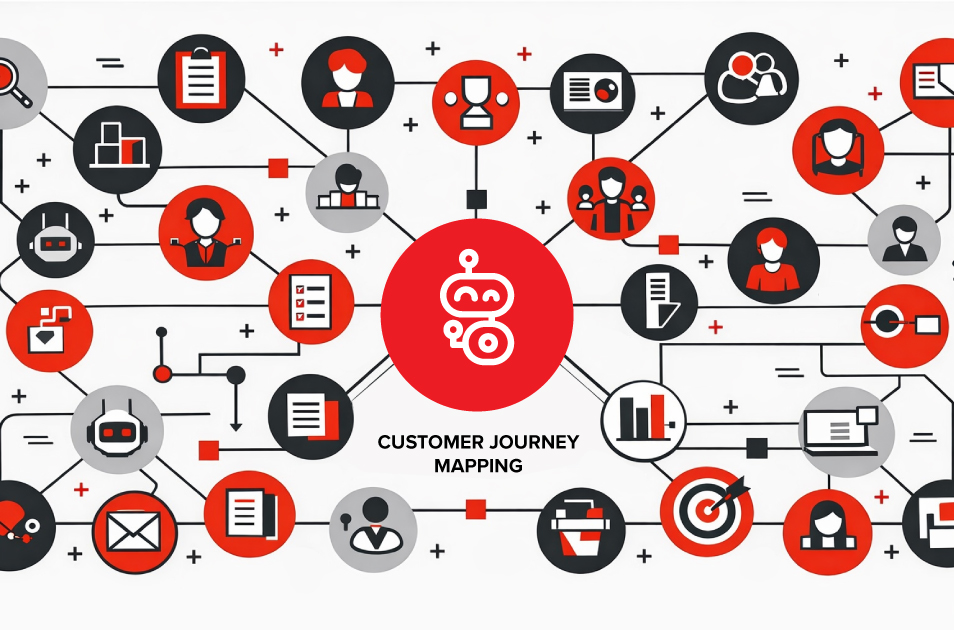
The role of AI in customer journey mapping: understanding and enhancing the path to purchase
Technology has changed how businesses interact with customers at every touchpoint. Artificial Intelligence (AI) now plays a key role in helping brands better understand and enhance the customer journey. From discovery to decision-making and even post-purchase engagement, AI-driven tools have made customer journey mapping more accurate and actionable. Understanding the path to purchase is no longer guesswork. Instead, it relies on data, advanced analytics and purposeful automation.
Understanding Customer Journey Mapping
Customer journey mapping refers to visualizing every step a buyer takes with a business. The journey might begin with awareness triggered by a social media post, move to consideration driven by email marketing and lead to the purchase. Afterwards, it often extends into advocacy and retention activities. Traditional mapping techniques relied on user interviews, surveys and manual analysis. These methods lacked the speed and specificity to keep pace with customer expectations in 2026.
The Evolving Customer Path
With an increase in digital touchpoints, mapping the buying journey requires more technology and insight than ever. Each person uses multiple devices switching between online and offline experiences. The pathway has become nonlinear, with customers entering and exiting at different stages. To keep up, businesses turn to marketing automation powered by AI to track, analyze and optimize every interaction.
The Power of Artificial Intelligence in Customer Journey Mapping
AI drives innovation in customer journey mapping, identifying patterns across millions of data points. Algorithms work in real time, discovering trends that people would likely miss. This constant stream of insights enables businesses to adapt marketing strategies on the fly. Instead of simply reacting, brands can anticipate customer needs before they appear, guiding the journey proactively.
Data Collection and Integration
AI quickly collects and combines data from multiple sources including websites, apps, social media and CRM systems. By handling structured and unstructured data—with input from searches, chats or clickstreams—AI provides a holistic customer view. It supports strategic decisions based on actual behavioral insights rather than assumptions or outdated reports.
Behavior Analysis and Prediction
An AI marketing strategy platform uses predictive analytics to forecast what customers will do next. For example, when someone abandons a shopping cart, AI can identify whether a targeted offer or reminder might bring the user back. Algorithms segment visitors based on real-time behaviors, tailoring campaigns and messages for individuals or groups. The marketing strategy generator enables brands to provide personalized experiences that improve engagement and drive conversions.
Personalization at Scale
Personalization remains at the heart of effective customer journey enhancements. AI makes it possible to tailor content, offers and recommendations for each individual at every touchpoint. Automatic segmentation updates as new behaviors emerge allowing for more relevant interactions. The personalization that AI enables goes beyond traditional demographics and considers actual behavior and preferences in near real time.
Dynamic Content Delivery
AI marketing operations platforms deploy automation that determines when, where and how to deliver content. Websites and emails display personalized recommendations, banners or offers based on current session activity and historical preferences. This level of customization increases the likelihood of interactions progressing positively along the buying journey, meaning more prospects turn into satisfied customers.
Predictive Analytics for Better Decision-Making
AI-powered predictive analytics enables marketers to identify prospects most likely to convert, repurchase or engage with a brand. Machine learning models can score leads, recommend next best actions and set marketing priorities based on both historical and live data. A well-crafted ai marketing strategy factors in these insights, enabling teams to adjust campaigns quickly if expected outcomes shift. This approach saves resources and ensures marketing efforts align with key business goals.
Reducing Churn and Boosting Retention
By analyzing behavior patterns, AI helps spot possible churn risks before customers leave. Marketing automation can then deliver tailored retention offers, satisfaction surveys or exclusive benefits at the right moment. Continuously watching these signals allows businesses to react promptly, maintaining customer loyalty and keeping acquisition costs lower in the long run.
Automation Streamlining the Journey
AI-enabled marketing automation orchestrates complex journeys that would be difficult and time-consuming for humans to manage. Automated workflows follow each potential customer through key milestones, triggering emails, messages and ads based on interactions. This hands-off approach reduces manual work for marketing teams, lets them focus on strategy and creativity, and strengthens the consistency of the brand voice throughout the journey.
Real-Time Optimization
Modern marketing strategy generator solutions incorporate real-time feedback. As campaign performance indicators shift, the platform automatically adjusts budgets, messaging or targeting. This continuous optimization ensures resources get allocated to channels and tactics producing the best return. AI also adapts to external influences like seasonality, market trends or competitor moves with minimal delay.
Measuring Success with Actionable Insights
The right ai marketing operations platform transforms scattered data into actionable insights. Robust dashboards display key metrics across every touchpoint enabling marketers to measure progress against goals. With a single source of truth, teams quickly see where journeys break down or where opportunities exist to escalate engagement.
Attribution and ROI Tracking
AI-powered tools help assign value to each stage of the customer journey. Marketers can see which campaigns or channels have the greatest influence on decisions. Insights from attribution modeling then guide future investment, budget reallocations and improvements to messaging. This method demystifies the buyer journey, delivering greater clarity in measuring marketing performance and business growth.
Future Trends: AI’s Expanding Influence in Customer Experience
AI will continue to shape the landscape for customer journey mapping, prediction and personalization. Advancements in natural language processing will enable more meaningful interactions via chat, voice assistants and social media. Customer journeys will become even more individualized, with AI generating strategies, recommendations and experiences that adapt on the fly.
Cross-Channel Integration and Unification
Future ai marketing strategy platforms will link all marketing activities seamlessly. Marketers will manage campaigns, content and optimization across web, email, search and social from a unified interface. Such integration positions teams to create consistent, memorable experiences regardless of where and how customers interact.
Balancing Automation, Personalization and Human Touch
While AI brings speed, efficiency and insight to customer journey mapping, balance remains essential. Automation handles complex processing tasks, but people still bring creativity, empathy and authenticity to brand-customer relationships. The most successful strategies integrate AI for intelligent support without losing sight of the personal touch that builds lasting trust.