
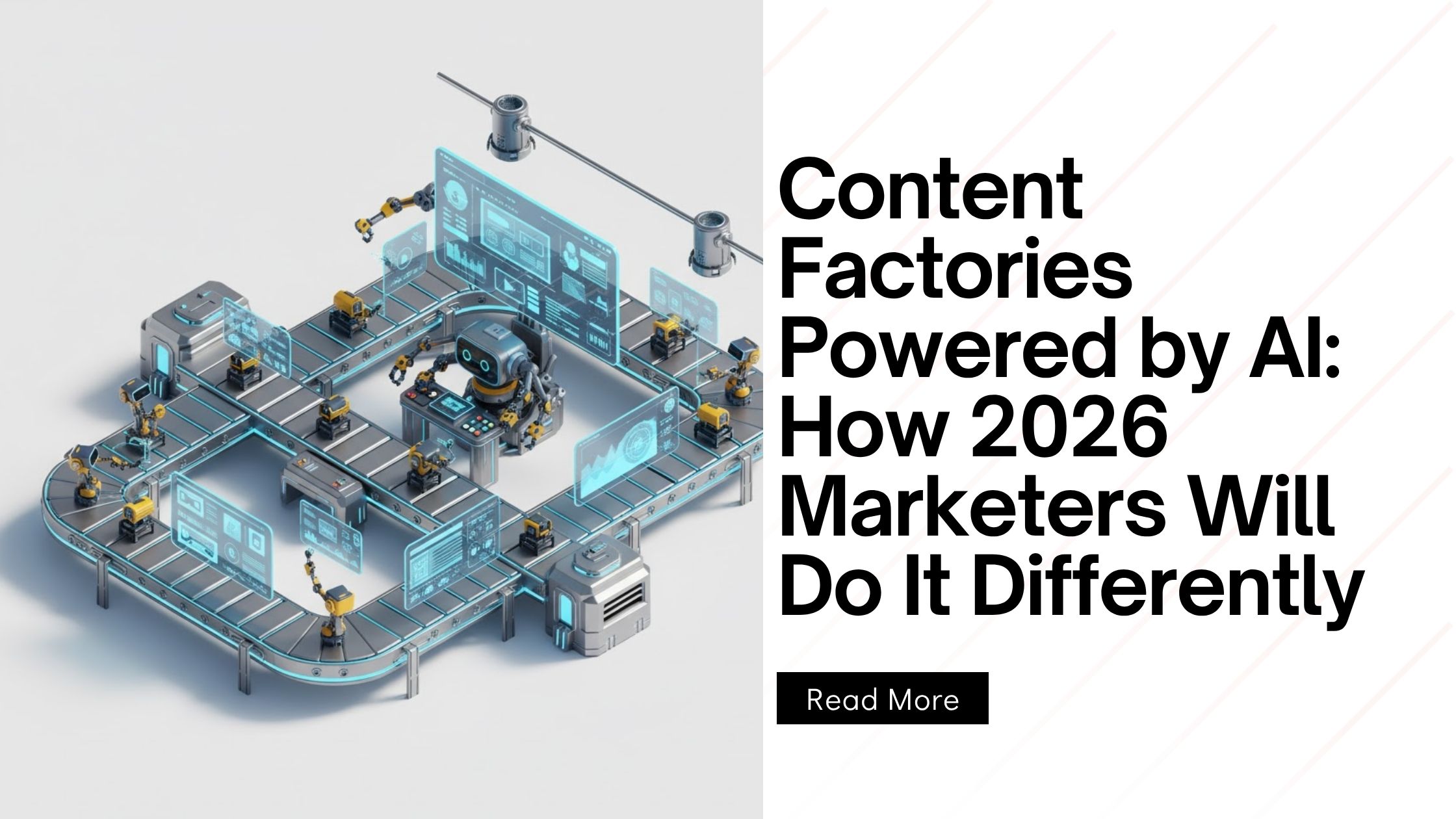
Content Factories and AI Generated Content: A 2026 Guide for Modern Marketers
Marketers keep searching for ways to improve how they plan, produce and distribute content. In 2026, the concept of a content factory is not just a buzzword or a vague ambition. It has become a vital operating model for organizations seeking to achieve results at scale. Technology, especially the combination of artificial intelligence and human expertise, now underpins every efficient marketing operation. Professionals demand faster ROI, audience-centric messaging and measurable content performance. Understanding what a content factory looks like in 2026 shows the future of digital marketing belongs to those who integrate AI, effective workflows and actionable data.
Defining the Content Factory: 2026’s New Reality
The term content factory carries significant weight for marketers in 2026. Unlike traditional models where content creation relied on scattered teams or manual tools, a content factory leverages automation, AI-generated content, and human supervision. It is a streamlined, repeatable process where strategy, production workflows and distribution converge. At the core, this model aims to increase content velocity, cut costs and deliver consistent quality. Marketers now rely on content factories to deliver a continuous stream of tailored messaging across platforms and formats. Real-time adjustments and multipoint distribution ensure that every piece of content supports business objectives and improves ROI content outcomes. By adopting this approach, professionals keep pace with shifting audience preferences and market demands.
The Role of AI and Human Editors in Content Production
The influence of AI in content creation has never been greater, but the human factor still matters. In 2026, AI Marketing Strategy tools produce preliminary drafts, recommend topics and optimize for SEO best practices. Human editors review, enhance and curate the output, ensuring tone, accuracy and brand consistency. This hybrid approach enables marketers to scale content production without sacrificing quality. Teams work faster as AI generated content streamlines ideation and first drafts. Editors verify factual accuracy, align the messaging and ensure creativity remains a hallmark. The resulting process balances speed with authenticity and audience connection. This synergy between machine efficiency and human intelligence drives the most effective content factories.
Production Workflows: From Ideation to Distribution
Optimized production workflows form the backbone of a successful content factory. The process begins with AI-powered ideation. Algorithms suggest topics using real-time data, previous performance and predictive analytics. Next, the production phase kicks in—AI generated content yields first drafts and recommended structures, which human editors fine-tune. Automated approval and collaboration tools cut delays in content readiness. Distribution represents another leap forward. Content distribution engines within an Intelligent Campaign Tool schedule optimized times, select channels and localize messaging for each audience. Feedback loops link engagement analytics back to the start of the workflow, allowing teams to adapt quickly. This multi-stage operation delivers scale, relevance and personalization that surpasses legacy processes in every metric that matters to marketers.
Cost Savings and Speed Gains Through Automation
Marketing automation 2026 promises financial and operational benefits that far outpace manual approaches. Automated content factories significantly reduce the hours needed for planning, writing, reviewing and publishing. This change translates to lower personnel costs and reallocates creative resources to higher-impact initiatives. The Intelligent Campaign Tool oversees seamless scheduling, social amplification and ongoing optimization with minimal human intervention. Organizations report up to 60% faster go-to-market times for major content campaigns. AI generated content helps streamline repetitive tasks and minimize errors, further driving operational efficiency. Smaller teams can now accomplish more, while enterprises find it easier to coordinate efforts across regions or business units. The result is accelerated content velocity with measurable cost advantages, ensuring budgets stretch further even as quality improves.
Metrics: Tracking Content Velocity, Engagement and Conversion
In 2026, success in content marketing hinges on an ability to measure, analyze and respond in real time. Content velocity takes the spotlight—it measures how quickly and consistently organizations produce high-value assets. Metrics like engagement rates, dwell time and conversion show which ideas resonate and which tactics deserve reinvestment. An advanced Digital Dashboard unifies these data points for marketers. The dashboard presents customizable, real-time visualizations for KPIs. It tracks impressions, click-through rates and audience segmentation, linking activities back to revenue and ROI content outcomes. Predictive analytics flag emerging trends or dips in performance, guiding proactive moves. This transparency arms professionals with the data needed to iterate production workflows and strengthen decision-making. Ultimately, disciplined measurement supports content factories as engines of tangible growth and competitive advantage.
Marketing Automation 2026: The Intelligent Campaign Tool Ecosystem
The rise of marketing automation 2026 signals a new era marked by AI, data integration and workflow orchestration. The Intelligent Campaign Tool pulls together ideation, content production, scheduling and distribution in one seamless interface. AI generated content flows directly from strategy to execution. Human editors inject nuance or industry-specific insights, ensuring differentiated outputs. Marketers schedule content distribution across social platforms, blogs or even press releases without relying on separate tools. Automation empowers teams to test, analyze and refine campaigns in real time. Predictive algorithms within the tool recommend optimal posting schedules and target audiences, maximizing content reach and engagement. This connected ecosystem brings unprecedented speed, coordination and data-driven precision to every campaign.
Content Distribution in 2026: More Channels, Greater Precision
Content distribution strategies have achieved new sophistication by 2026. Rather than random or one-size-fits-all approaches, marketers deploy targeted content that matches each segment’s preferences and consumption habits. AI powered content factories segment audiences on behavior, interests and historical engagement data. The Intelligent Campaign Tool schedules, localizes and personalizes communication, making every asset highly relevant. Marketing teams use dynamic content delivery for social media, email, paid search and web platforms. AI generated content adapts format and messaging to suit where and how audiences interact. Distribution metrics feed back into the Digital Dashboard, showing which channels drive the most engagement and conversion. Marketers adjust strategies in near real time, staying agile as audience preferences shift. This new standard of precision ensures every piece of content supports strategic business goals and delivers measurable ROI content value.
ROI Content and Business Impact
ROI content is more than just a catchphrase for marketers in 2026. High-performing content factories deliver tangible returns by aligning production workflows with sales and business targets. Chatbots, guided experiences and interactive formats all start with data signals from the Digital Dashboard. These touchpoints collect leads, nurture prospects and increase conversion rates through tailored messaging at every customer journey stage. Marketing leaders now tie investment directly to bottom-line results. They report on metrics like cost per acquisition and lifetime value, showing clear links from marketing automation 2026 tools to business expansion. The focus on generating measurable value from every output has elevated content strategy from a soft science to a hard-edged business discipline. At the heart of this shift lies a new commitment to data, workflow integration and ongoing optimization, making impactful, measurable marketing the default expectation rather than the exception.
The Human Element: Editors and the Art of Storytelling
Amid all the talk about content factory efficiency and AI generated content, the power of human storytelling remains irreplaceable. Professional editors bring life to data-driven drafts, bridging organizational expertise with the emotional needs of audiences. They fine-tune scripts, build brand voice and inject context that only human experience delivers. Training and upskilling marketing teams on AI-powered platforms create new opportunities for creativity and leadership. Editors learn to interpret analytics, provide feedback on automated outputs and shape ongoing production workflows. This partnership between technology and talent transforms marketing operations from mechanical content churn to authentic, persuasive communication. By balancing automation with empathy and storytelling, organizations realize the full potential of modern content factories.
Scalability and Customization: The Value of a Truly Autonomous Content Factory
Marketers now face higher demands for both speed and personalization. Content factories powered by marketing automation 2026 technologies address both requirements through autonomous, scalable systems. AI Marketing Strategy tools craft personalized content calendars, adjusting campaigns for each market, persona or product line. The Intelligent Campaign Tool allows central oversight while enabling local adaptation. The Digital Dashboard maintains visibility, providing stakeholders with real-time updates and granular insights. Automation engines orchestrate production workflows across multiple brands, regions or channels without losing cohesiveness. As a result, organizations scale their marketing efforts quickly, responding to opportunity without sacrificing control or creativity. These developments mark the arrival of the next-generation content factory: One that is tailored, efficient and ready to meet the challenges of a global digital audience.
Future Trends: Preparing for 2027 and Beyond
Looking ahead, the foundations laid by 2026 content factories will continue to evolve. AI generated content will become more conversational, adapting to emerging formats like voice and AR. Marketing automation 2026 platforms will further deepen integration with sales, customer service and product development. Content distribution will adapt to new platforms, as channels emerge or fade in and out of relevance. Professionals will find even more ways to extract actionable insights from massive data sets, shifting from descriptive to prescriptive analytics. As organizations continue to refine production workflows and invest in tools like the Intelligent Campaign Tool and Digital Dashboard, the competitive edge will belong to those who keep content agile, strategic and relentlessly focused on business results.