
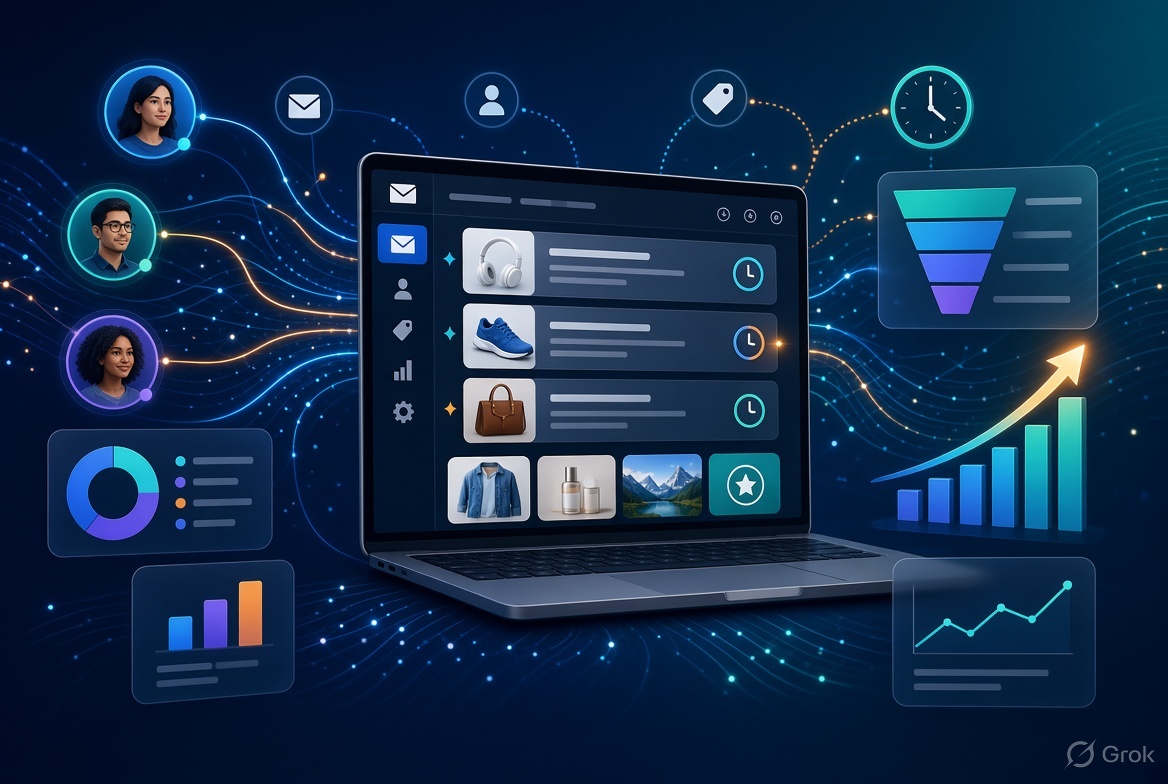
AI-driven email marketing: personalizing communication for higher conversion rates
Personalization has reshaped nearly every marketing channel over the last decade. Email marketing stands apart for its ability to produce direct, measurable engagement. The integration of artificial intelligence with email marketing now lets brands communicate in ways that are precisely targeted, highly responsive, and uniquely tailored at scale. This approach leads to significant improvements in conversion rates. As platforms for AI marketing strategy and marketing automation become standard across businesses of all sizes, transforming email campaigns from generic broadcasts into individualized, outcome-focused messages has become more attainable than ever.
Why personalized email marketing outperforms generic campaigns
Most generic marketing emails are quickly deleted or ignored. Contrastingly, emails that speak to a recipient’s preferences, purchase history, and position in the buying journey stand a far better chance of sparking engagement. Personalization is effective because it values the recipient’s time and interests, demonstrating that an organization recognizes and understands individual needs. When AI-powered systems shape campaign design, messaging becomes both more relevant and timely. This increases the likelihood of capturing attention, prompting action and, most importantly, contributing to sales or engagement goals.
Scaling personalization with artificial intelligence
True personalization once demanded significant manual work and deep customer insight. Now, an AI marketing operations platform can collect, process, and interpret large volumes of data from multiple sources in real time. This vastly simplifies the process, powering everything from continuous list segmentation and dynamic content adaptation to send-time optimization. AI-driven email marketing is not merely a glimpse of the future, it is a cornerstone of the best marketing strategies today.
Real-time segmentation and highly relevant targeting
Rather than work from static contact lists, AI-driven systems constantly analyze user behavior, transactional patterns, and engagement histories. Segments adjust automatically. As a result, marketers can target users with content specifically chosen for them, increasing both relevance and engagement with each send.
Predictive timing for higher engagement
AI determines the optimal time to deliver each email. By tracking recipient behavior, it predicts when users are more likely to read and interact with messages. Aligning messaging with intent at these optimal times leads directly to higher open and click-through rates, and ultimately, increased conversions.
Dynamic, individualized content
Advanced tools can build every email in real time, drawing upon a library of assets and user profile data. Each message is composed to reflect individual interests and actions, with personalized product recommendations, content based on browsing behavior, or localized offers that drive relevance, engagement, and urgency.
How an AI marketing strategy strengthens email performance
Email marketing performance is fundamentally shaped by the power of an organization’s marketing strategies. An AI marketing operations platform can integrate with CRM and analytics tools to bring together data from the web, social channels, and offline activity, translating that information into actionable, predictive insights. AI can then analyze which messaging and content perform best in each segment, optimize subject lines, determine the most effective frequency of messaging, and ensure every send is tightly aligned with business and sales objectives.
Anchoring campaigns to business goals
AI-driven email campaigns maintain a direct connection to business priorities at every stage, from reactivating lapsed customers to supporting live events or building awareness for new offerings. Each touchpoint is adjusted to reflect what matters most in the bigger picture, so that marketing becomes a catalyst for growth, not merely a support function. Every interaction is tracked so its contribution to key metrics is transparent and measurable.
Continuous improvement through feedback loops
AI enables continuous campaign refinement. Automated marketing tools review campaign data in real time, comparing actual results against forecasts and adjusting campaign variables on the fly. These self-improving feedback loops help marketers adapt to audience behavior shifts, market trends, or seasonality to keep messaging both fresh and effective.
Simplifying complexity and reducing manual labor
Curation of segmented lists, composing and testing content, and managing multiple campaign variants can be labor-intensive and error prone. By introducing automation through an AI marketing strategy platform, marketing teams minimize manual work while maintaining high quality and personalization across large audiences. This frees up resources for creative ideation and strategic direction.
Essential components of an AI-driven email marketing approach
Effective AI-powered email marketing demands that several interdependent elements work seamlessly together. Each serves not just to personalize the user experience but also to advance wider business objectives and ensure processes can scale as the business grows.
Robust data collection and enrichment
Thorough data collection is foundational for personalization. AI systems synthesize data from every available customer interaction, digital and offline, building rich individual profiles. These profiles drive precise automation and enable smarter decision-making across every message sent.
Aligning campaigns with concrete business objectives
Success depends on intentional mapping between business priorities and individual email campaigns. For many marketing organizations, increasing repeat purchases or converting leads is a primary aim. Others may prioritize product launches, brand awareness, or event attendance. Aligning each campaign to a measurable goal ensures that marketing drives strategic progress as well as day-to-day engagement.
Intelligent, automated content workflows
Marketing automation allows for dynamic content creation and delivery with little to no manual intervention. AI-powered tools can generate, personalize, test, and send emails in one continuous process, optimizing everything from product showcases to promotional offers. Each message lands in the inbox primed to deliver genuine value, increasing the odds of a response.
Best practices for high-conversion rates using AI-driven email strategies
Sustained campaign success using AI requires a thoughtful approach and ongoing discipline. The following practices reinforce the effectiveness of AI in boosting conversion rates and growing the business.
Build on accurate, current data
Up-to-date, high-quality, and permission-based data is vital to the success of AI-powered marketing. Regular audits identify inaccuracies or outdated information that could hinder results. Reliable data enables more precise targeting, more effective recommendations, and increased recipient satisfaction.
Optimize through careful testing and refinement
AI platforms enable rapid and ongoing testing of subject lines, content elements, images, and calls to action. Marketers can run experiments at scale, examine results quickly, and apply insights to future campaigns. Continuous A/B testing powered by AI ensures campaigns remain fresh and effective for every segment of the audience.
Maintain privacy and honor user preferences
Trust is foundational for long-term engagement. Adhering to all privacy regulations and providing simple ways for users to manage their preferences is essential. AI-powered systems should use transparent data policies, reinforcing that personal information is respected and used responsibly. This protects the brand’s reputation and reduces unsubscribes.
Connect campaigns across multiple channels
Harnessing AI to bridge email with web, social media, and direct channels enhances campaign effectiveness. A comprehensive AI marketing strategy ensures every communication is consistent, well-timed, and distinctly relevant to where the customer is in their journey. Seamless, multi-channel integration helps create a cohesive experience that improves both engagement and campaign return on investment.
The new standard for personalized email communications
Artificial intelligence has transformed email marketing from a batch-and-blast tactic to a powerful tool for targeted, responsive communication. By linking consolidated customer data to predictive analytics and automated content management, businesses of any size can now offer value at every interaction while keeping costs manageable. Sophisticated AI marketing operations platforms let marketing teams, big or small, execute high-impact, personalized campaigns that were once possible only for large enterprises.
Marketers equipped with these tools do more than automate repetitive tasks. They initiate meaningful, relevant connections at scale, aligning every communication with specific business objectives, and bringing valuable opportunities to light. The success of high-conversion email programs now depends on clean data, intelligent design, and a firm commitment to privacy. When these principles and technologies work together, brands can deliver communications that foster loyalty and drive measurable growth for the organization.